-
 Home
Home
- /
- Environment
Environment & Sustainability
Protecting Our Environment, Powering a Sustainable Future
We aim to reduce emissions and operate cleaner vessels to minimise our environmental impact.
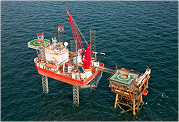
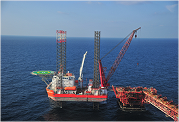
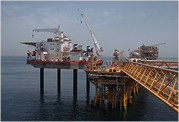
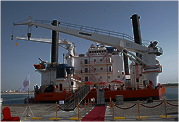
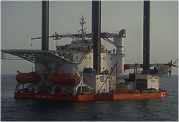
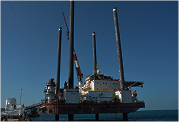
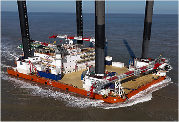
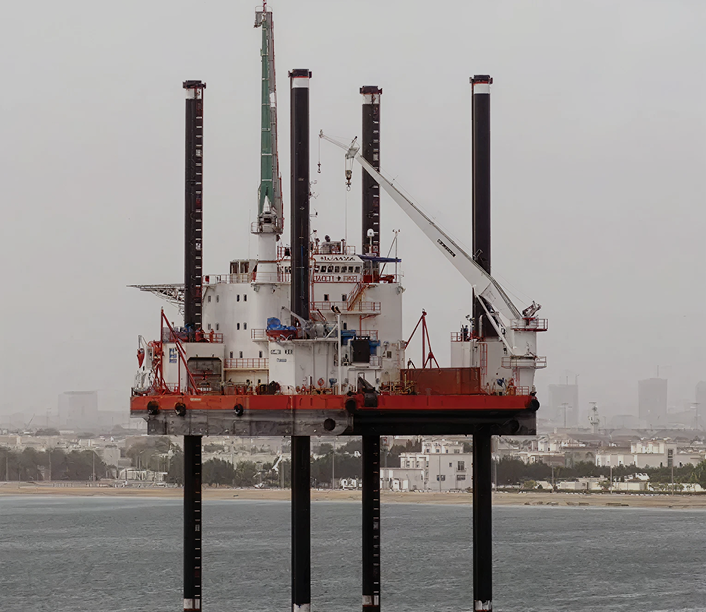
We cut emissions through voyage planning, preventive maintenance to minimize unnecessary fuel burn across the jack-up fleet.
We minimise waste by enhancing segregation, handling, storage, and disposal of all waste streams in line with MARPOL and local regulatory requirements.
We safeguard marine biodiversity by adherence to MARPOL, flag-state, and host-country environmental requirements, including protection of sensitive marine areas.
We improve energy efficiency through the use of LED lighting, HVAC optimisation, and improved insulation to reduce energy demand.
GHG Scope Dashboard
GMS tracks operational data to assess and manage emissions across all business areas. Continuous monitoring of electricity use, air travel, refrigerants and vessel fuel highlights measurable progress in reducing emissions year over year.
10.1%
Higher bunker fuel use in 2022
49%
- Decrease in purchased goods and services emissions
- 77% decrease in business travel emissions through improved data accuracy
- 22.5% overall decrease in Scope 3, which is in line with the company's commitment to reaching net-zero Scope 3 emissions by 2035
- Scope 1: Emissions that the company makes directly
- Scope 2: Emissions that the company produces indirectly through purchased energy generated by a third party (such as electricity). Because GMS rents its office space, the company has limited control over these emissions.
- Scope 3: Emissions that are not produced by the company itself and are not the result of activities from assets owned or controlled by them, but by those that it is indirectly responsible for, up and down its value chain.
Sustainability & Compliance Reports
These reports provide transparent insights into our environmental performance, energy use, climate-related risks, and broader ESG commitments. Each report reinforces our dedication to HSEQ commitments and policies and long-term sustainability.


TCFD Framework Compliance
| TCFD Recommendation | Climate-related Financial Disclosures | Compliance |
|---|---|---|
| Governance | ||
| a) Describe the Board’s oversight of climate-related risks and opportunities. | (a) A description of the governance arrangements of the Company in relation to assessing and managing climate-related risks and opportunities. |  Compliant
 |
| b) Describe management’s role in assessing and managing climate-related risks and opportunities. |
Compliant |
|
| Strategy | ||
| a) Describe the climate-related risks and opportunities the Company has identified over the short, medium and long term. |
(d) A description of: (i) The principal climate-related risks and opportunities arising in connection with the operations of the Company and, (ii) The time periods by reference to which those risks and opportunities are assessed. |
Compliant |
| b) Describe the impact of climate-related risks and opportunities on the Company’s business, strategy and financial planning. | (e) A description of the actual and potential impacts of the principal climate-related risks and opportunities on the business model and strategy of the Company. |
Compliant |
| c) Describe the resilience of the Company’s strategy, taking into consideration different climate-related scenarios, including a 2°C or lower scenario. | (f) An analysis of the resilience of the business model and strategy of the Company, taking into consideration different climate-related scenarios. |
Compliant |
| Risk Management | ||
| a) Describe the Company’s processes for identifying and assessing climate-related risks. | (b) A description of how the Company identifies, assesses and manages climate-related risks and opportunities. |
Compliant |
| b) Describe the Company’s processes for managing climate-related risks. |
Compliant |
|
| c) Describe how processes for identifying, assessing, and managing climate-related risks are integrated into the Company’s overall risk management. | (c) A description of how processes for identifying, assessing, and managing climate-related risks are integrated into the overall risk management process in the Company. |
Compliant |
| Metrics and Targets | ||
| a) Disclose the metrics used by the Company to assess climate-related risks and opportunities in line with the strategy and risk management process. | (h) The key performance indicators used to assess progress against targets used to manage climate-related risks and realise climate-related opportunities and a description of the calculations on which those key performance indicators are based. |
Compliant |
| b) Disclose Scope 1, Scope 2, and if appropriate, Scope 3 Greenhouse Gas (GHG) emissions and related risks. |
Compliant |
|
| c) Describe the targets used to manage climate-related risks and opportunities and performance against targets. | (g) A description of the targets used by the Company to manage climate-related risks and to realise climate-related opportunities and performance against those targets. |
Compliant |
Minimising Waste, Maximising Efficiency
We apply responsible waste-management processes across vessels and operations, ensuring safe disposal, lower material waste, and improved resource efficiency. These practices strengthen environmental protection in offshore operations.
- Enforcing strict waste segregation and disposal across vessels.
- Reducing material use through recycling and efficient planning.
- Monitoring waste streams to minimise offshore environmental impact.
- Promoting crew participation in sustainable waste management practices.
GMS remains committed to reducing waste, protecting natural resources, and maintaining a sustainable operating environment for future generations.
Partnerships & Global Framework
Sustainability at GMS aligns with regional and international frameworks to ensure credibility and consistency.
- UK reporting requirements including SECR and TCFD.
- Other optional requirements like ESG and GHG reports.
- IMO and IMCA environmental and marine protection rules.
- ISO 9001, ISO 14001, and ISO 45001 certification structure.
- Supports CDP Disclosure.
These partnerships strengthen our compliance foundation and support investor and client expectations worldwide.